
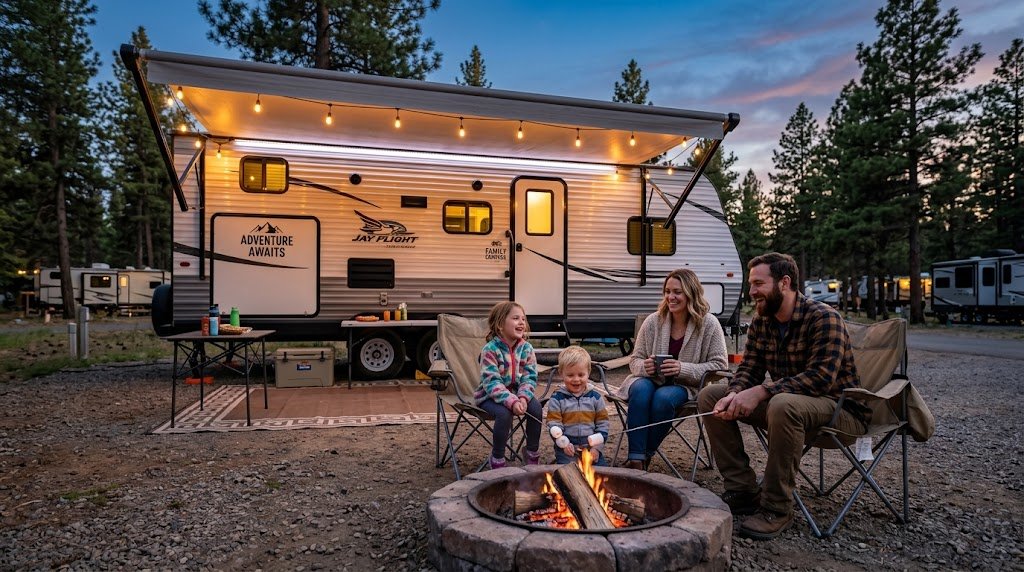
Are RV Parks Safe for Families with Small Children?
RV parks are generally safe for families with small children, and millions of families camp at them every year without serious incident. The level of safety depends on which park you choose and what precautions your family follows once you arrive. Parks designed with families in mind enforce speed limits, maintain secure entry, offer playgrounds, and keep amenities well-maintained. With smart park selection and a few clear campsite rules, camping with young children is not only safe but one of the most rewarding things a family can do together.
Are Most RV Parks Safe for Families?
The short answer is yes. The overwhelming majority of RV parks in the United States welcome families and actively maintain a safe, community-oriented environment. Unlike many public spaces, RV parks tend to have a tight-knit culture where neighbors watch out for one another. Activity happens outdoors and in the open, which naturally creates informal supervision of children playing between sites.
Most parks enforce low internal speed limits, typically five to ten miles per hour, and many use speed bumps, stop signs at intersections, and narrow one-way roads to slow traffic through the property. Campground hosts and on-site managers are usually present and attentive. Many parks use coded gate entry or key fob systems that limit who enters the property.
That said, not every RV park is equally suited to families. Some parks primarily cater to retirees and long-term residents and are simply not set up with young children in mind. A small number of parks are explicitly 55-plus communities where children are not permitted to stay. Checking a park's family policy before you book is a straightforward step that saves potential frustration on arrival.
What Safety Risks Should Parents Know About at RV Parks?
Being informed about the real hazards helps parents address them before an issue arises. None of these risks are unique to RV parks, but the campground setting does present them in forms that parents may not have encountered before.
Vehicle traffic within the park. This is the most common hazard for young children in any campground. Even at five miles per hour, vehicles move through park roads continuously during check-in and check-out times. Children playing near roads or darting between sites need close supervision, particularly during morning hours when the most movement happens.
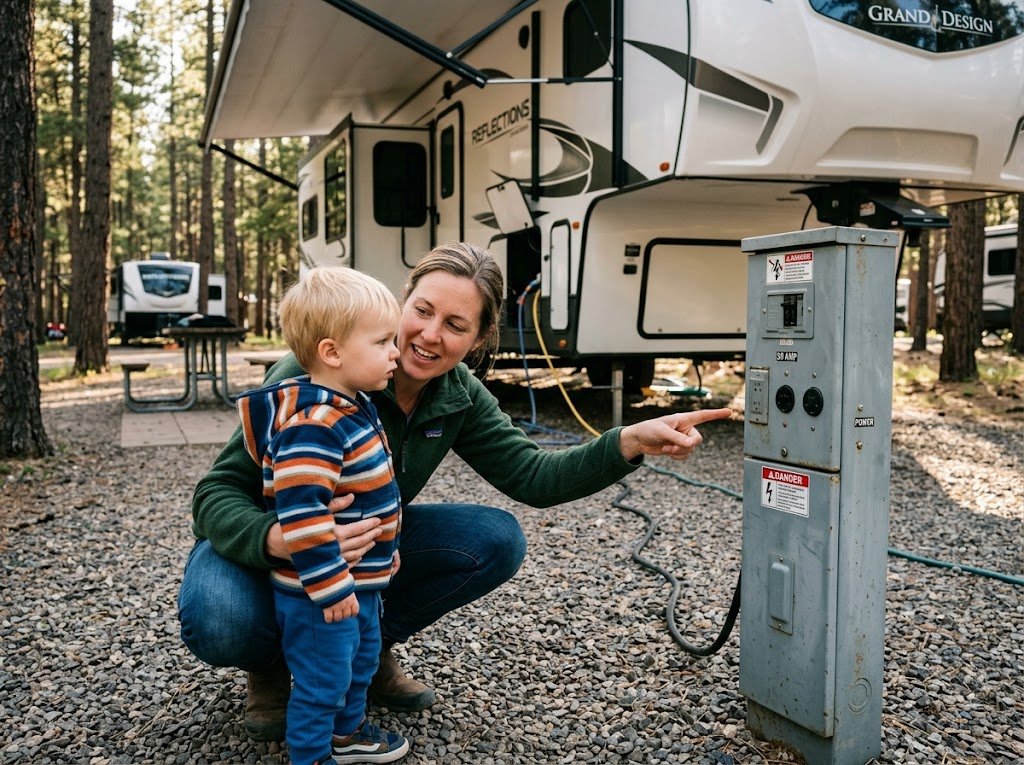
Electrical pedestals at each hookup site. These outdoor electrical connections operate at the same voltage as home outlets. Curious toddlers and young children should be taught firmly from the first day that electrical boxes and cords at the campsite are off-limits. This rule needs to be set before you even unhitch.
Campfires and grills. Fire pits at most campground sites sit low to the ground, placing open flame at a young child's level. The heat from an open fire ring is not always obvious to small children approaching from a distance. A clearly established fire line that children never cross is one of the most important campsite rules experienced camping families use consistently.
Swimming pools and natural bodies of water. Many RV parks have swimming pools, and parks located near lakes or rivers give children access to natural water. Water is one of the greatest draws of camping for kids, and it requires constant supervision. Children should wear properly fitted life jackets near open water, and the eyes-on rule should never be relaxed near any swimming area.
Wildlife. In Montana and across the western United States, campgrounds can bring families into proximity with deer, raccoons, coyotes, and occasionally bears. Securing food, keeping a tidy campsite, and teaching children not to approach or feed any wildlife are all essential practices for camping in these regions.
Propane tanks and fuel containers. Items stored outside the RV near hookup connections should be kept secured and away from children's reach. Young children should understand that the exterior of the rig, especially near fuel and utility connections, is an adult-only area.
What Makes an RV Park Genuinely Family-Friendly?
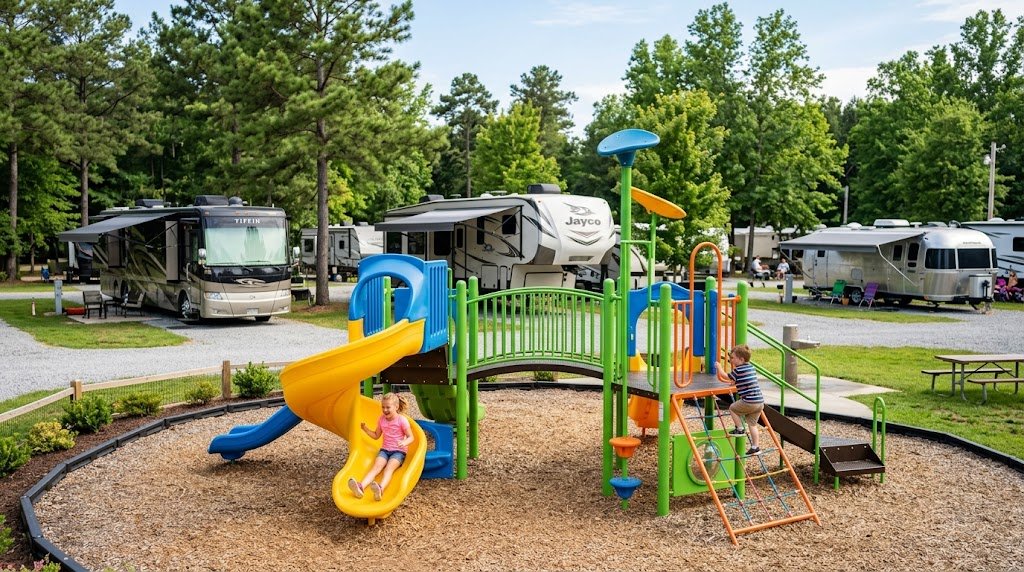
Not every RV park that accepts families is equally suited to them. These specific features separate truly family-oriented parks from those that simply don't turn children away.
✓Dedicated family loops or sections keep families with children together in areas designed for that level of activity, away from guests seeking a quieter stay. Parks that think about layout are parks that think about families.
✓Playgrounds and organized activities are the clearest signal that a park was built with children in mind. KOA campgrounds are well known for their playgrounds, jumping pillows, and scheduled kids' programming during peak season.
✓Fenced or properly gated pool areas matter significantly for families with young children. A pool surrounded by a self-closing, self-latching fence is dramatically safer than an open pool in a high-foot-traffic area.
✓Actively enforced speed limits. A posted five-mph sign means little if vehicles routinely ignore it. Parks that use physical traffic calming, campground hosts, or regular patrols demonstrate that their speed rules are genuine.
✓Good lighting along common paths and bathhouse areas. Nighttime bathroom trips with toddlers are a reality of camping with young children. Well-lit paths reduce the risk of falls and make the walk back and forth from your site much easier to manage.
✓Clean, well-maintained shared bathroom facilities. The condition of bathhouses tells you a great deal about how a park is managed overall. Well-kept facilities suggest an attentive management team, which carries through to safety practices across the property.
✓On-site hosts or managers who are visibly present. A staffed park with active hosts creates a level of accountability that an unstaffed park cannot match. Hosts typically know their guests and can respond quickly to any issue that arises.
How Do You Choose a Safe RV Park for Young Children?
A small amount of research before booking makes a real difference in the quality and safety of your stay.
Read recent reviews from other families. Apps like The Dyrt, Campendium, and Campsite Photos aggregate real traveler reviews and let you filter by park type. Look specifically for comments from other families with young children about speed limit enforcement, pool conditions, and the overall atmosphere. Reviews from the past year are the most useful.
Study the park's layout before you book. Many parks post site maps on their websites. A layout with a central playground surrounded by family sites, with vehicle traffic managed along the outer perimeter, is meaningfully safer than a park where every campsite backs directly onto a main road through the property.
Call the park directly and ask specific questions. Ask whether they have a family section, what pool supervision looks like, whether there's a campground host on-site, what the actual speed limit is, and how it is enforced. Parks that take safety seriously will answer these questions easily and with confidence.
Confirm the park accepts young children. While most private campgrounds and all state and national park campgrounds welcome families of all ages, a small number of parks have age restrictions. Verify before you book.
Consider the park type. KOA Holiday and KOA Journey locations are consistently family-oriented by design. State park campgrounds are well-maintained and generally safe, with a more nature-focused experience and fewer organized amenities. Private family-themed parks often offer the most organized activities and kid-friendly programming.
What Campsite Safety Rules Should Families Establish?
Arriving at the park with a clear set of rules for young children takes a few minutes and prevents a lot of stress. Experienced camping families tend to establish the same core rules each time they set up, so children know what to expect before they even step outside the rig.
No crossing campground roads without a grown-up.Campground roads feel casual, but vehicles move through them at all hours. Make this rule non-negotiable from the first trip.
Set a campsite boundary.Show young children exactly how far they can roam without checking in first. Mark visual anchors they can remember, such as a neighboring tree or picnic table edge.
Teach your campsite number to every child old enough to repeat it.A young child who can tell a campground host their site number can be returned to you quickly if they wander. Write it on their wristband for toddlers who can't remember it reliably.
Designate a clear meeting spot.Pick one easy-to-find location, such as your rig or the camp office, that children know to go to if they get turned around or separated.
Establish the fire line before lighting anything.Point out exactly how close children may stand near the fire pit and grill. Practice this at setup, not after the fire is burning.
No solo bathhouse visits for young children.Shared bathroom facilities are a practical reality at most campgrounds. Children should go with a sibling who is old enough to help or with an adult, particularly after dark.
Eyes on the water, always.No exceptions near pools, lakes, or rivers. Life jackets go on before approaching any natural body of water.
Does Your RV Choice Affect Family Safety at Camp?
The RV itself plays a meaningful role in how safe and manageable campground life is with young children. Certain features make a genuine difference.
Bunkhouse floor plans
A dedicated bunkroom puts children's sleeping area on the opposite end of the RV from the kitchen and primary living space. This separation reduces the chance of small children reaching cooking surfaces or appliances during meal preparation, which is one of the more common injury risks inside any small space.
Full interior bathrooms
Having a private bathroom inside the RV eliminates nighttime bathhouse trips with toddlers entirely, which is both safer and significantly more practical. For families with children still in night training, this feature alone is worth prioritizing when choosing a unit.
Lockable exterior storage bays
Outside storage compartments that lock give you a secure place for fuel containers, tools, cleaning chemicals, and any other items you don't want accessible to children. RVs with generous storage make it easy to keep hazardous materials completely out of reach.
Slide-outs and interior space
More living space inside the RV means children have room to play away from cooking and utility areas. Larger units with multiple slide-outs function more like a small home, which makes managing daily routines with young children far more realistic.
How Pierce RV Can Help Families Camp with Confidence
At Pierce RV, we work with families across Montana who are looking for an RV that fits both their adventure goals and the practical realities of camping with young children. Our team understands what matters when small kids are part of the trip, and we'll steer you toward floor plans and features that make family camping genuinely safe and enjoyable rather than stressful.
We carry a wide selection of new and pre-owned RVs built for families, including bunkhouse travel trailers and fifth wheels with the space and layout features that matter most. Our financing team can help you find monthly terms that fit your budget, and our service department keeps your rig in road-ready condition so you're not dealing with unexpected breakdowns miles from home.
Stop by our dealership or contact our team to talk through what floor plan would work best for your family. We'd love to help you find the right unit and get out there.
Frequently Asked Questions
Are RV parks safe at night for families with children?
Most established RV parks are safe at night. Parks with coded gate entry, on-site hosts, and good perimeter lighting offer the most secure environment after dark. The biggest nighttime consideration for families with young children is not safety from outside threats but practical management, such as nighttime bathroom trips. RVs with private interior bathrooms solve this entirely. Bringing basic flashlights and establishing a rule that children don't leave the RV at night without an adult covers most concerns.
Are KOA campgrounds good for families with young children?
KOA campgrounds are among the most consistently family-friendly options in the country. KOA Holiday and KOA Journey locations typically offer playgrounds, swimming pools, organized kids' activities during peak season, camp stores, and clean bathhouse facilities. They operate to a franchise standard, so the experience is more predictable than an independently managed private park. Many families with young children find KOA campgrounds an ideal starting point for RV camping because the infrastructure is specifically designed to support them.
What should I do if my young child gets lost at an RV park?
Go to the campground office or find the on-site host immediately. They can make a park-wide announcement and are familiar with the layout. Before this happens, prepare your child with your campsite number, teach them to go to the camp office if they get turned around, and consider writing your cell number on the inside of a young child's wrist or wristband at the start of each camping day. Establishing a family meeting spot before you explore is the most effective preventive step.
What age is appropriate for children to start RV camping?
There is no minimum age for RV camping. Families bring infants and toddlers in RVs regularly with good results. The key is choosing an RV with a proper indoor bathroom, adequate sleeping space for each child, and enough interior room to manage daily routines comfortably. Younger children also benefit from shorter travel days while they adjust to life on the road. Starting with nearby destinations and shorter trips lets your family find a rhythm before taking on longer journeys.
What are the biggest hazards at RV parks for toddlers specifically?
For toddlers, the three biggest hazards are electrical pedestals at hookup sites, open fire pits or grills, and vehicle traffic on campground roads. Toddlers move quickly and unpredictably, so establishing a clear boundary around your campsite from the moment you arrive is essential. Teaching toddlers to freeze when they see a vehicle moving, the same way you would near a parking lot, builds a habit that directly addresses the traffic risk. Eyes-on supervision is the most important tool for keeping toddlers safe at any campground.
What type of RV is safest and most practical for families with young children?
A bunkhouse travel trailer or fifth wheel with a dedicated bunk room and a full interior bathroom is the most practical configuration for families with young children. The bunk room keeps children's sleeping area separated from cooking and living spaces, and having an indoor bathroom eliminates nighttime bathhouse trips entirely. Fifth wheels offer additional space and a separated master bedroom for parents. Class C motorhomes are another solid option, particularly for families who prefer an all-in-one unit with no separate tow vehicle required.
Final Takeaway
RV parks are safe environments for families with young children, and with the right preparation they can be genuinely exceptional ones. The families who have the best experiences are those who do a little research on the park before they book, arrive with a clear set of campsite rules their children have heard before, and choose an RV with features that make family camping manageable and comfortable rather than cramped.
Safety at camp starts well before you pull into the park. It starts with choosing the right unit, talking to your kids about what the rules will be, and picking a destination that's set up to welcome your family. Pierce RV can help with the first part. Browse our family-oriented RV inventory online, or come visit us in Montana to talk with a team member about what would work best for your next trip.
