
Can a Family Legally Live in an RV Full-Time? What You Need to Know
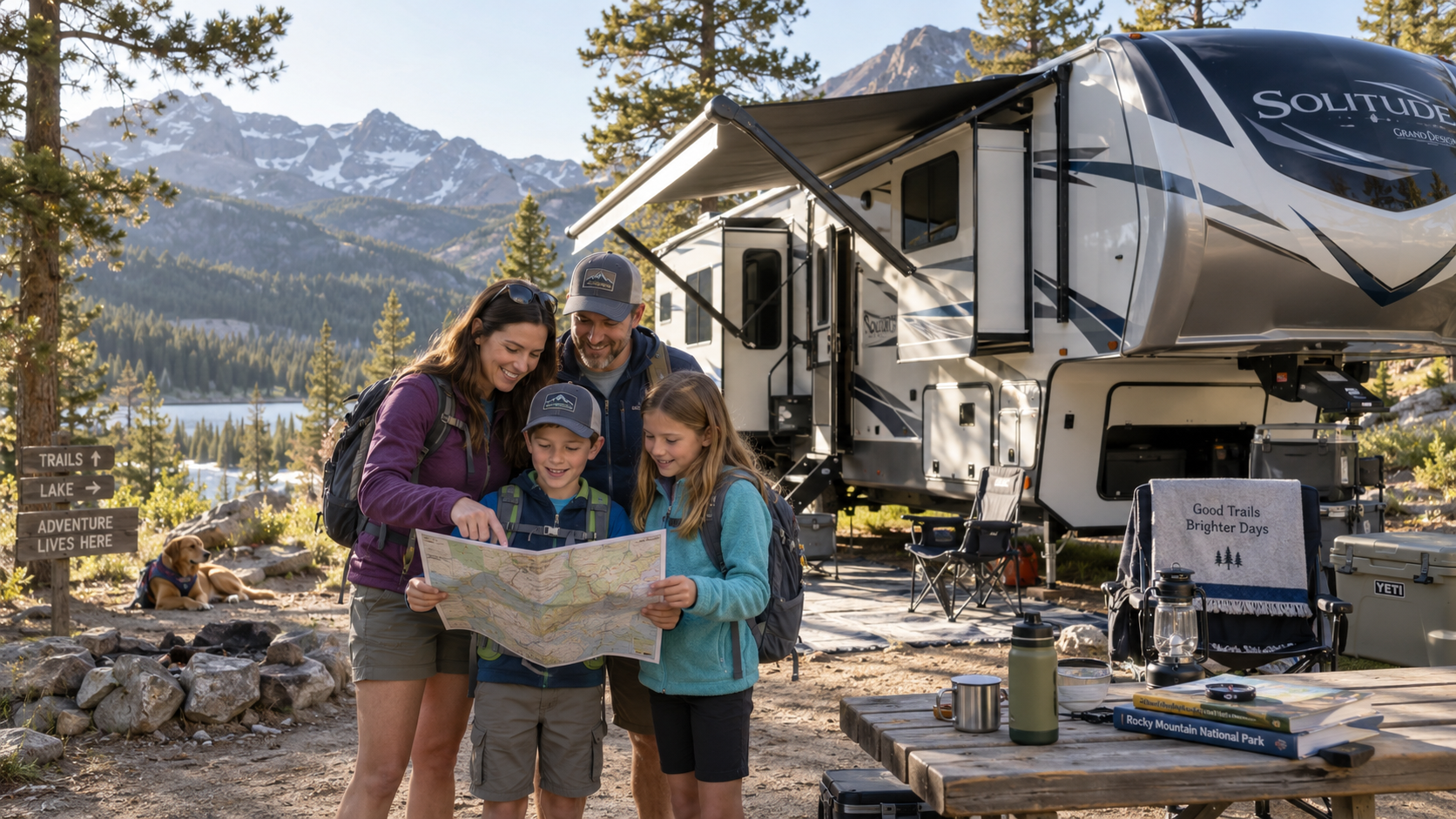
Yes, a family can legally live in an RV full-time in the United States. There are no federal laws against it, but you will need to handle several important legal requirements. Choosing a domicile state, registering your vehicles, managing your children's schooling, and securing health insurance all need to be addressed before you hit the road for good. Families who plan carefully find that full-time RV living is entirely legal and genuinely rewarding.
Is It Actually Legal for a Family to Live in an RV?
Full-time RV living is legal at the federal level. No U.S. law prohibits a family from making an RV their primary residence. The complexity comes at the state and local level, where questions about legal residency, vehicle registration, and school enrollment each carry their own requirements.
Every American citizen must maintain legal residency somewhere. You need a registered home state for your driver's license, vehicle registration, and tax filings. As a family living full-time in an RV, your rig is your home, but you still need a physical address on file in a specific state.
At the local level, some cities and counties limit how long you can park overnight on public streets. National parks, state parks, and private campgrounds each set their own rules on length of stay. Planning your route and knowing local regulations wherever you travel is a normal part of managing the lifestyle legally and without hassle.
What State Should a Full-Time RV Family Use as a Domicile?
Your domicile is your legal home state, even if you travel year-round and never spend a single night there. Three states stand out among full-time RVers for very practical reasons: South Dakota, Florida, and Texas.
South Dakota is the most popular choice. It has no state income tax, straightforward vehicle registration with no annual inspection requirement, and a simple process for establishing residency with as little as one night in a campground. The state effectively welcomes full-time travelers.
Florida also has no state income tax and offers relatively simple residency requirements. It works especially well for families who spend significant time traveling through the South and Southeast.
Texas has no state income tax, though it does require vehicle inspections. The registration and residency process is manageable, and it suits families already connected to the state.
Once you choose your domicile state, you'll register all vehicles there, obtain your driver's licenses there, and handle voter registration there. Mail forwarding services provide you with a physical mailing address in your domicile state, which is used for all official correspondence and government documents.
What Are the Best RV Types for Full-Time Family Living?
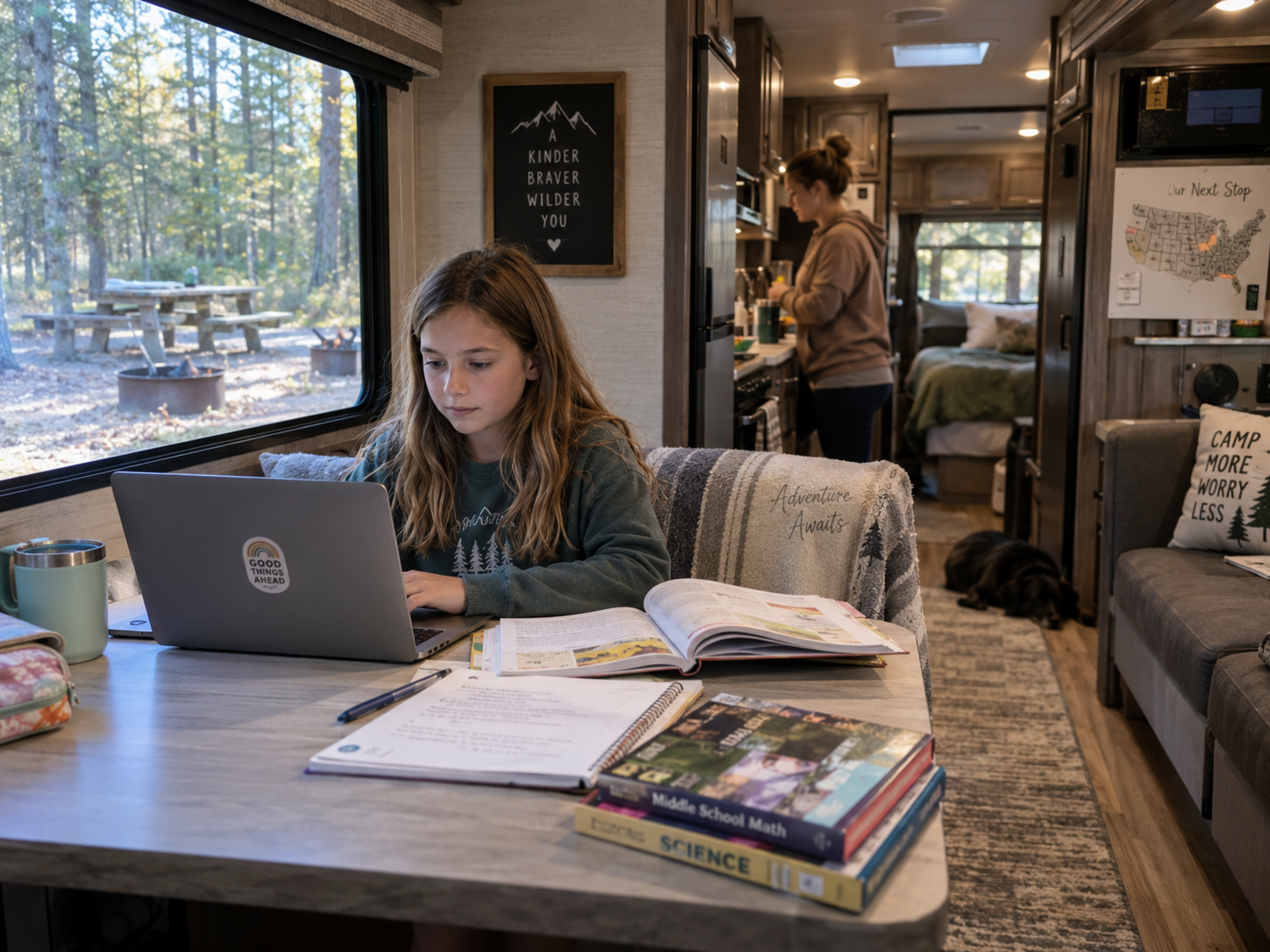
Choosing the right RV is arguably the most important decision a family makes before going full-time. Space, comfort, durability, and livability matter far more than they do on a weekend camping trip. What works perfectly for a couple can feel impossibly cramped for a family of four.
Fifth Wheels
Fifth wheels are among the most popular choices for full-time families. The split-level design creates a true bedroom separation in the upper section, giving parents their own space. Residential-quality kitchens, full bathrooms, and generous storage make them feel more like a home than any other towable. They require a properly equipped pickup truck with a fifth wheel hitch, but the livability is difficult to match.
Class A Motorhomes
Class A motorhomes offer the most square footage and the most residential feel. Many models include in-unit washer-dryer hookups, full-size refrigerators, and multiple dedicated sleeping areas. They represent a significant investment but make daily living genuinely comfortable for larger families planning to stay on the road for years.
Class C Motorhomes
Class C motorhomes are a practical middle ground. They're easier to drive than a Class A, typically more affordable, and still offer solid living space with the over-cab sleeping area and a rear bedroom. Many families start their full-time journey in a Class C and upgrade after their first year.
Bunkhouse Travel Trailers
Large travel trailers built with bunkhouse floor plans are designed with families in mind. A dedicated bunk room gives children their own sleeping area and personal space, which matters a great deal when your family shares close quarters around the clock. Travel trailers also tend to offer more floor plan options at a lower price point than fifth wheels or motorhomes.
The right choice depends on your family size, budget, how frequently you'll be moving, and your tow vehicle. Talking with an RV expert before buying saves time and prevents costly mistakes.
How Does Schooling Work for Children Living in an RV?
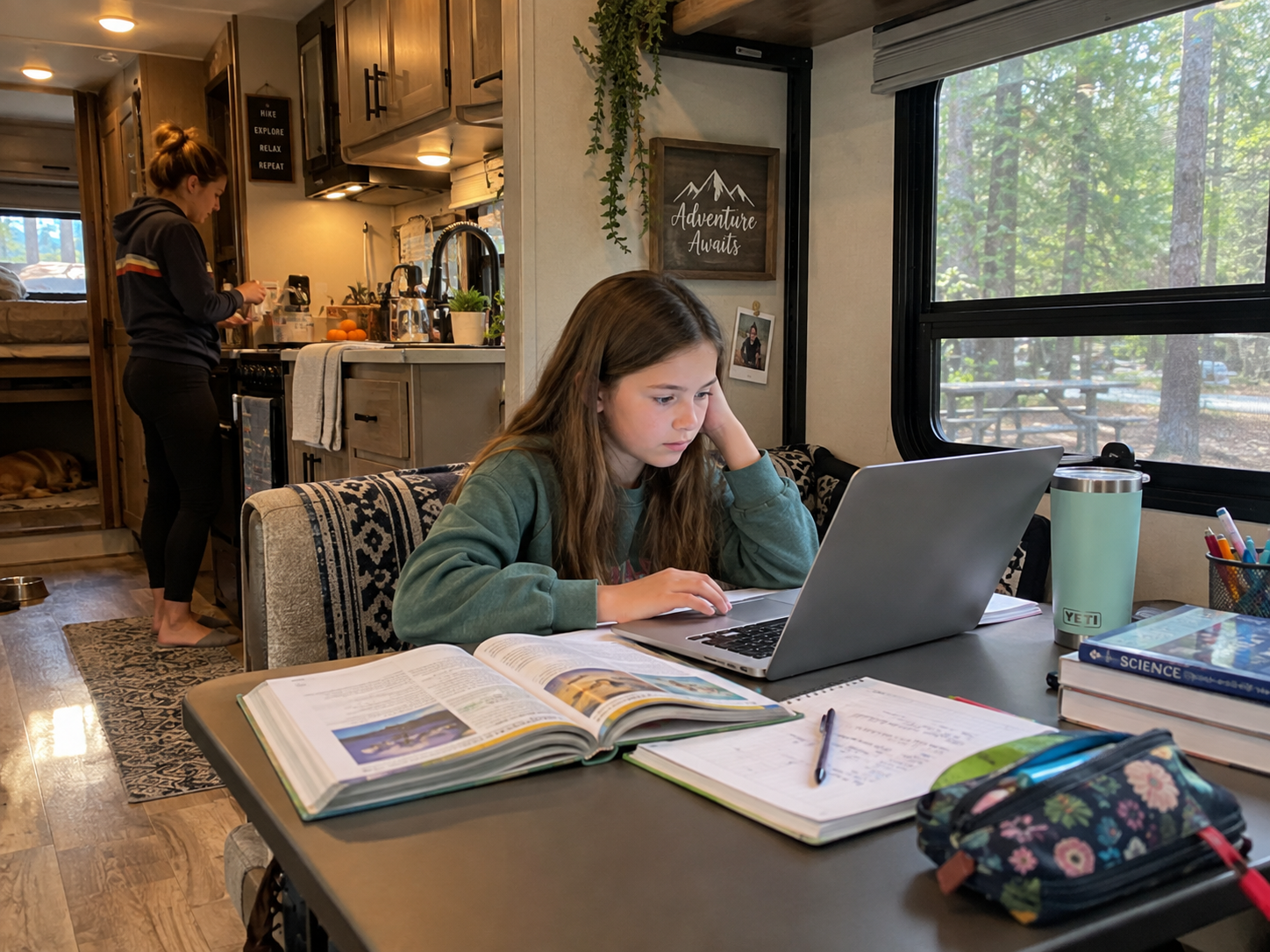
Education is one of the first questions families ask, and the answer is reassuring. There are solid, legal paths forward for children at every grade level.
Homeschooling is legal in all 50 states and is the most common solution for full-time RV families. Most families register under their chosen domicile state's homeschooling laws, which remain in effect regardless of where the family is physically camping. South Dakota, Florida, and Texas each have relatively simple homeschooling requirements, which is one more reason these states attract full-timers.
Accredited online schools offer structured, grade-level curriculum with official transcripts. Many programs are state-accredited and designed specifically for families who need flexibility in when and where learning happens.
Roadschooling blends formal curriculum with real-world experience. Visiting national parks, historical landmarks, science museums, and local communities across the country becomes part of the education. Families who embrace this approach often find it enriches their children's learning in ways a traditional classroom cannot replicate.
The key point is that children living in an RV are subject to the same compulsory education laws as any other child. Meeting those requirements through homeschooling or accredited online programs keeps families fully compliant.
What Are the Biggest Legal and Practical Challenges?
Understanding the real obstacles upfront helps families prepare and avoid the most common mistakes first-time full-timers encounter.
Where to park long-term is one of the central challenges. Most campgrounds, state parks, and national parks limit stays to 14 or 30 days. Private RV parks, campground membership networks, and seasonal sites help fill those gaps. Some families also incorporate Bureau of Land Management land, which allows free camping but has its own rules on how long you can stay in one spot.
Health insurance requires careful research before you leave conventional employment behind. ACA marketplace plans from your domicile state are the most widely used solution, but coverage quality varies significantly based on how each plan handles care received outside of the plan's primary service area. Some full-timers use healthcare sharing ministries or short-term health plans as alternatives. Telemedicine has also become a significant resource, allowing routine consultations from anywhere with a cell signal.
RV park age restrictions can occasionally limit your options. Some retirement-focused communities and 55-plus parks don't accommodate families with children, but family-friendly campgrounds and RV parks are widely available across every region of the country.
Mail and banking require a bit of setup but are manageable. A mail forwarding service connected to your domicile state address handles physical correspondence. Staying paperless for bills, bank statements, and tax documents eliminates most of the friction. Most major banks and credit unions now function entirely through mobile apps, which suits full-time travelers well.
How Much Does It Cost for a Family to Live in an RV Full-Time?
Costs vary widely based on your RV, how often you move, campground preferences, and lifestyle choices. Here are the main budget categories to plan for before making the commitment.
The RV itself is the largest upfront expense. A used family-oriented bunkhouse travel trailer or fifth wheel can range from roughly $20,000 to well over $80,000 depending on age, size, brand, and condition. Class A and Class C motorhomes span an even broader range. Financing options are available whether you're buying new or used, and your monthly payment becomes a substitute for rent or a mortgage in most cases.
Ongoing monthly expenses typically include campground fees, fuel if you move frequently, propane, RV insurance, health insurance, food, and a maintenance fund. Many full-time families find their monthly cost of living is comparable to or lower than what they spent maintaining a traditional home, particularly once you factor out a mortgage or rent payment.
Routine RV maintenance is a genuine ongoing cost that families sometimes underestimate. Tire replacement, roof seal inspection, slide-out maintenance, appliance upkeep, and occasional mechanical repairs all add up. Building an emergency repair fund before you leave gives you a financial cushion that protects the lifestyle when unexpected issues arise.
How Pierce RV Can Help Your Family Get Started
At Pierce RV, we work with families at every stage of the full-time RV journey, from those just beginning to explore the idea to experienced travelers looking to upgrade to a floor plan that better fits their family's needs. Our team understands that choosing an RV for full-time living is a completely different conversation than picking one for weekend trips.
We carry a wide selection of new and pre-owned RVs across multiple categories, including fifth wheels, travel trailers, and motorhomes. Our financing team works with a range of lenders to find terms that fit your budget, whether you're purchasing your first RV or trading in your current unit to step up in size. Our service department is here after the sale to keep your rig road-ready, and our parts team can help you outfit your RV with the accessories that make full-time living more comfortable.
Ready to explore? Reach out to our team or visit our dealership to speak with someone who can match your family's needs to the right unit.
Frequently Asked Questions
Can you use an RV as a permanent address?
You cannot use a campground as a permanent legal address, but most full-time RVers resolve this by using a mail forwarding service connected to a physical address in their chosen domicile state. States like South Dakota, Florida, and Texas are popular choices because they make it straightforward to establish legal residency without requiring you to actually live there year-round. This address then functions as your official address for all legal and government purposes.
Do you have to pay property taxes if you live in an RV full-time?
You won't pay traditional real estate property taxes on a home you no longer own. However, your RV may be subject to personal property taxes or annual registration fees depending on your domicile state. Some states calculate these fees based on the value of the vehicle, which functions similarly to a property tax on the RV itself. Choosing a tax-friendly domicile state like South Dakota can minimize these costs significantly compared to high-tax states.
Is it legal to live in an RV park long-term?
Many RV parks offer extended stay or seasonal sites that are designed for longer-term residents. Standard campgrounds, state parks, and national parks typically enforce limits of 14 to 30 days before you're required to move on. Private campground membership networks often give members access to longer stays at affiliated locations. Always confirm the specific rules of any park before committing to a long-term arrangement, since policies vary considerably from park to park and state to state.
What is the best RV for a family of four living full-time?
A fifth wheel or a bunkhouse travel trailer is generally the best fit for a family of four going full-time. Both offer dedicated sleeping areas for children, residential-quality kitchens, full bathrooms, and enough storage to manage daily life comfortably. Fifth wheels add the advantage of a true bedroom separation between the parents' space and the kids' area. Class C motorhomes are another strong option for families who want an all-in-one unit without the need for a separate tow vehicle.
Do children living in an RV have to attend school?
Yes. Children living in an RV are subject to the same compulsory education laws as any other child. Homeschooling is legal in all 50 states and is the most common solution among full-time RV families. Most families register under their domicile state's homeschooling laws, which apply to the family regardless of where they're traveling. Accredited online schools are another popular option, offering structured curriculum and official transcripts that satisfy state requirements and prepare children for higher education.
How do full-time RV families get their mail?
The standard solution is a mail forwarding service tied to a physical address in your domicile state. These services receive your mail and forward it to wherever you're currently located, either on a schedule you set or on demand. Many also offer digital scanning so you can review documents without waiting for a physical delivery. Staying paperless for bills, bank statements, and subscriptions reduces the volume of mail you need forwarded considerably.
What health insurance options are available for full-time RV families?
The most common choice is ACA marketplace insurance purchased through your domicile state. The important thing to check is how each plan handles out-of-network care, since you'll be seeking medical services in many different states. Some families use healthcare sharing ministry programs or short-term health plans as alternatives. Telemedicine services have become a practical solution for routine medical needs, making it possible to consult a doctor from virtually anywhere with a reliable internet connection.
Final Takeaway
Living in an RV full-time as a family is completely legal in the United States, but it requires genuine planning before you commit. Establishing a domicile state, handling schooling, securing health insurance, and choosing an RV built for long-term family living are all decisions that need careful thought upfront.
The families who thrive in this lifestyle are the ones who did their homework early and chose the right RV from the start. A unit that's too small, underpowered, or missing key features will make full-time living frustrating rather than freeing.
Pierce RV is here to help you make that first big decision with confidence. Browse our full RV inventory online, learn about financing options, or stop by our dealership in Montana to talk with our team. We've helped many families across the region find exactly the right unit for their next adventure.
