
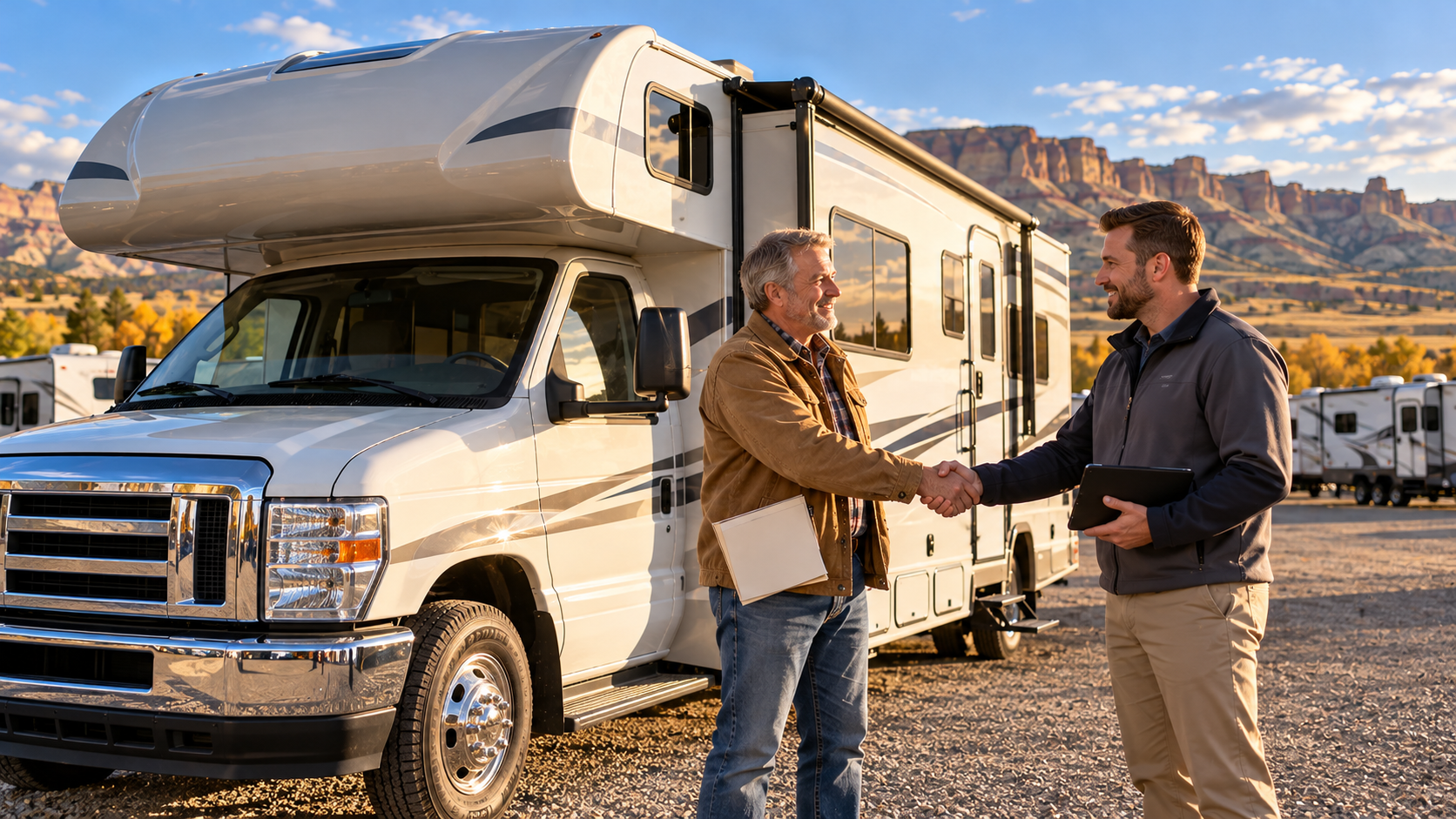
How Much Is My RV Worth? How to Find Your RV's Real Value
Your RV is worth what a buyer or dealer will actually pay for it today, which depends on its type, year, brand, floorplan, condition, mileage or generator hours, and local demand. To estimate it, check a valuation guide such as J.D. Power RV values, compare similar RVs listed for sale near you, and get a professional appraisal from an RV dealership. Expect a trade-in offer to come in below private-sale and retail prices.
No single website can tell you exactly what your RV will bring. Online tools give you a starting range, but condition and local demand move the final number. Below, we explain what drives RV value, how to look it up step by step, and how to get the strongest offer when you sell or trade in your RV.
What Determines How Much an RV Is Worth?
An RV's value is determined mainly by its type, age, brand and model, condition, usage, features, and the local market. Condition often matters most, because two RVs of the same year and model can be thousands of dollars apart depending on how they were stored and maintained.
Here is how each factor plays in:
RV type: Motorhomes carry an engine and chassis, so their values follow both the RV market and the vehicle market. Travel trailers, fifth wheels, and toy haulers are valued mostly on the living space and construction.
Age and model year: Like any vehicle, RVs depreciate, with the steepest drop typically in the first few years of ownership.
Brand, model, and floorplan: Popular floorplans, such as bunkhouses for families or rear-living layouts for couples, tend to sell faster. Well-known brands with strong dealer networks also hold buyer interest.
Condition: Water damage, delamination, worn seals, and tired upholstery pull value down quickly. A clean roof and dry floors are worth real money.
Mileage and hours: For motorhomes, chassis mileage matters. Generator hours matter on any RV that has one.
Features and upgrades: Solar, lithium batteries, upgraded suspension, or a newer refrigerator can add appeal, though upgrades rarely return their full cost.
Season and location: In a state like Montana, demand rises ahead of camping season. Local demand for a specific type, such as truck campers or toy haulers, can also shift what buyers will pay.
Paperwork: A clean title and complete service records make an RV easier to sell and easier to finance for the next buyer.
How Do You Look Up Your RV's Value?
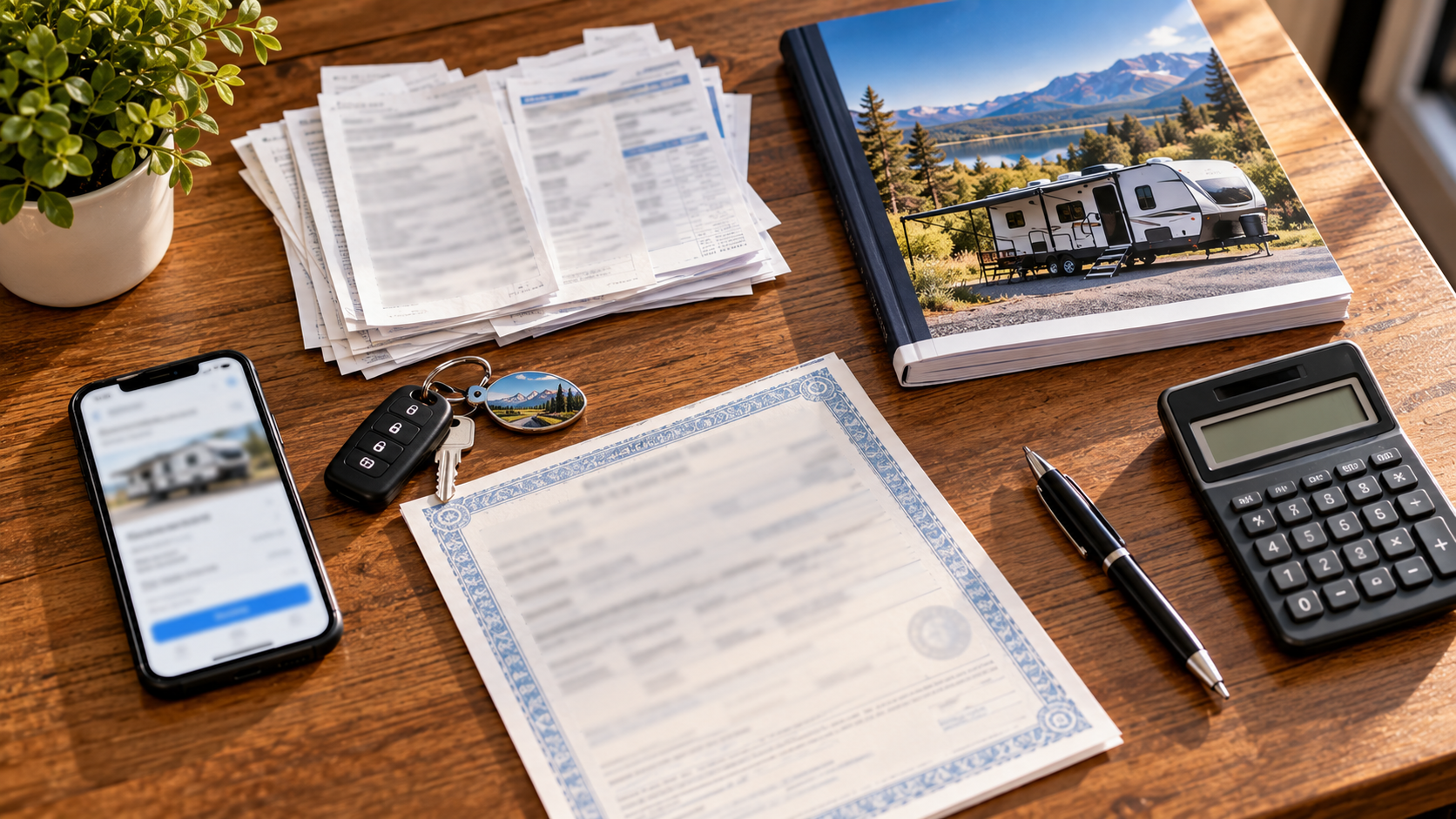
To look up your RV's value, gather its exact details, check a valuation guide, compare similar listings in your region, and then get a real appraisal. Each step narrows the range, and the appraisal tells you what a dealer will actually offer.
Gather your RV's details. Write down the year, manufacturer, model, floorplan or model number, VIN, length, slide count, mileage or generator hours, and any options. The model number matters, since one model line can include many floorplans with different values.
Check a valuation guide. J.D. Power, which publishes the RV values formerly known as NADA Guides, is the most widely used reference. Enter your options carefully and note the range it gives.
Compare real listings near you. Search for the same year, model, and floorplan for sale within a few hundred miles. Keep in mind that asking prices are not selling prices, and dealer listings include reconditioning and support that a private sale does not.
Be honest about condition. Walk your RV like a buyer would. Roof wear, soft spots, or appliance problems will come up in any inspection, so factor them in now.
Get a professional appraisal. A dealership appraisal looks at your actual RV, not just a database entry, and gives you a real number to work with. You can start that conversation through Pierce RV's RV trade-in value page.
Practical tip: Take clear photos of the exterior, interior, roof, and any upgrades before you request a value. Good photos lead to a more accurate first estimate.
What Is the Difference Between Trade-In Value and Private-Sale Value?
Trade-in value is what a dealer will pay for your RV toward another purchase. Private-sale value is what an individual buyer might pay you directly. Retail value is what a dealer lists the RV for after reconditioning it. Trade-in is usually the lowest of the three, but it is also the fastest and simplest.
The gap between these numbers is not just dealer profit. When a dealer takes your RV in trade, they take on the cost of inspection, repairs, cleaning, holding it on the lot, and supporting the next buyer.
Trading in your RV
Pros: One transaction, no strangers at your door, no title or lien headaches, and the value goes straight toward your next RV. In many states, trading in can also reduce the taxable amount on your next purchase, so check your state's rules.
Cons: The offer will typically be below private-sale value.
Best for: Owners who are upgrading and value time and convenience.
Selling your RV privately
Pros: Usually the highest dollar amount you can realistically get.
Cons: You handle advertising, showings, test drives, negotiations, payment verification, and title transfer. If you still owe on the RV, paying off the loan and releasing the lien adds another step.
Best for: Owners with time, patience, and an RV in strong condition.
Understanding retail value
Retail value is the price you see on dealer lots. It reflects a unit that has been inspected, reconditioned, and backed by a service department. Do not use retail listings as the benchmark for your trade-in offer, since the two numbers measure different things.
Our recommendation: If you plan to buy another RV, compare your trade-in offer with your realistic private-sale price minus the time, risk, and possible tax savings. For many owners, the difference is smaller than it first appears.
How Can You Increase Your RV's Value Before Selling or Trading?
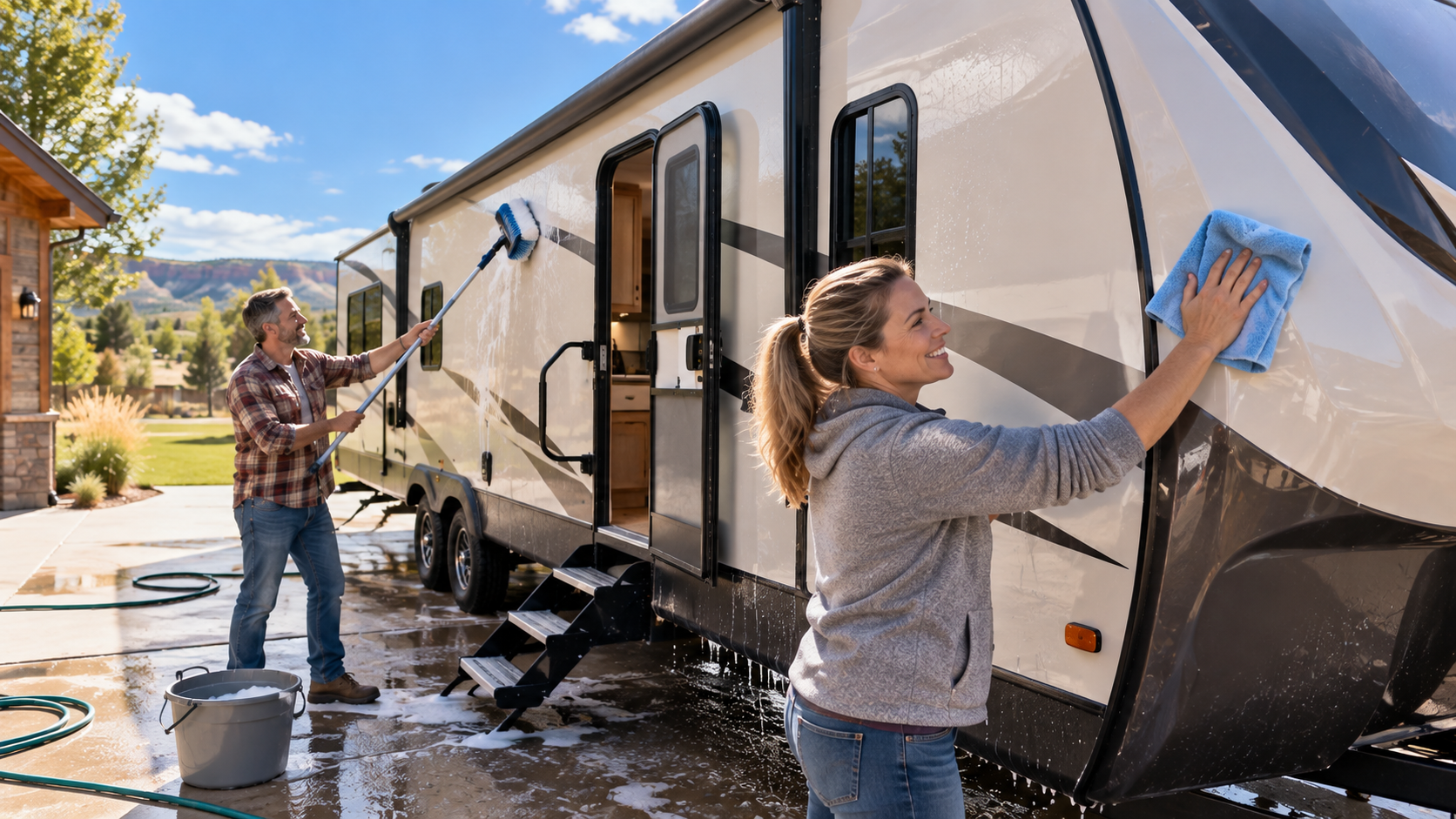
You can increase your RV's value by cleaning it thoroughly, fixing small problems, gathering service records, and making sure every system works. Buyers and appraisers pay more for an RV that looks cared for and has no surprises.
Focus on the steps that pay off without big spending:
Deep clean inside and out. Wash and wax the exterior, clean the roof, shampoo carpets and upholstery, and clear out personal items. First impressions shape the offer.
Fix the small stuff. Replace burned-out bulbs, broken cabinet latches, torn screens, and worn sealant. Small defects make buyers wonder what else was neglected. Pierce RV's Billings parts department and Great Falls parts department carry common replacement parts.
Address leaks before anything else. A known roof or window leak should be repaired by a qualified technician. Hidden water damage found during an appraisal lowers value more than the repair would have cost.
Service the big systems. Recent maintenance on the generator, brakes, bearings, or engine gives buyers confidence. The Billings RV service center and Great Falls RV service center can handle that work.
Organize your paperwork. Put the title, service receipts, manuals, and warranty documents in one folder.
Gather all keys and accessories. Spare keys, remotes, sewer hoses, and original equipment add value and reduce haggling.
Time it well. In Montana, spring demand is typically stronger than late fall, though trading in during the off-season can line up well with off-season buying.
Do not sink money into major upgrades right before selling. New flooring or a new TV rarely returns its full cost in a trade-in or private sale.
What Mistakes Do Owners Make When Valuing Their RV?
The most common mistakes are using dealer asking prices as your target, overvaluing upgrades, and underestimating condition issues. These lead to unrealistic expectations and frustrating negotiations.
Watch out for these:
Comparing to retail listings. Asking prices on dealer lots include reconditioning and service support. They are not what a dealer pays on trade.
Choosing the wrong model or options in a valuation guide. One wrong floorplan or option entry can swing the estimate significantly.
Counting upgrades at full price. Buyers value working systems more than added extras.
Ignoring condition. Valuation guides assume a certain condition. Soft floors, delamination, or a worn roof will pull the real number below the guide.
Forgetting about the loan payoff. If you owe more than the RV is worth, that difference has to be handled when you sell or trade.
Waiting too long. RVs keep depreciating and aging. Holding out for a higher number can cost you more than you gain.
The fix for most of these is simple: get a real appraisal on your actual RV, then compare it with realistic private-sale prices in your area.
Where Can I Get My RV Appraised in Montana?
You can get your RV appraised by a local RV dealership such as Pierce RV, which has stores in Billings and Great Falls. A dealer appraisal looks at your actual RV in person and gives you a real number you can apply toward your next RV.
Pierce RV has been a Montana family business since 1924 and an RV dealer since 1969, and it works with owners from across Montana, Wyoming, North Dakota, South Dakota, and Idaho. Here is how to get started:
Request a trade-in value. Begin on the Pierce RV trade-in page with your RV's year, make, model, and condition.
Bring it to either store. Visit the Billings location or the Great Falls location so the team can see your RV in person.
Line up your next RV. Browse new RVs for sale or used RVs for sale to see what your trade value can go toward.
Plan the financing. If you are applying trade value toward a purchase, review RV financing options at the same time.
If you are trading up to a bigger towable, check the Pierce RV tow guides to make sure your truck is a match before you settle on a floorplan.
Frequently Asked Questions
Is NADA still used to value RVs?
The RV values once known as NADA Guides are now published under the J.D. Power name. Many dealers, lenders, and insurers still use J.D. Power values as a reference point. Treat the number as a starting range, not a final price. The guide cannot see your RV's actual condition, local demand, or how well it has been maintained, and those factors often decide the final offer.
Can I trade in an RV I still owe money on?
Yes. Most dealers accept trade-ins with an existing loan. The dealer pays off your lender as part of the deal. If your RV is worth more than the payoff, the difference goes toward your next purchase. If you owe more than it is worth, that negative equity has to be covered, either with cash or by adding it to your new loan when the lender allows it.
Why is my trade-in offer lower than the book value?
A valuation guide gives a general range for an average unit, while a trade-in offer reflects your specific RV and what it will cost the dealer to get it ready to sell. Reconditioning, repairs, tires, cleaning, and time on the lot all factor in. Condition issues found during the appraisal, like roof wear or soft floors, also lower the offer.
Does mileage matter on a travel trailer or fifth wheel?
Towable RVs do not have an odometer, so mileage is not part of their valuation the way it is for motorhomes. Instead, condition, age, and wear on tires, axles, bearings, and the hitch tell the story of how much the RV was used. Service records showing regular bearing and brake maintenance help support a stronger value.
Which RVs hold their value best?
RVs that hold value best are typically popular floorplans from well-known brands, kept in excellent condition with documented maintenance. Units that were stored under cover, kept free of leaks, and used regularly rather than left sitting usually fare better. Highly specialized or very custom RVs can be harder to sell because fewer buyers are shopping for them.
How long does an RV appraisal take?
An in-person RV appraisal at a dealership is usually a fairly quick process, but the timing depends on the RV and how busy the store is. The appraiser will look over the exterior, roof, interior, and systems, and may take a test drive in a motorhome. Calling ahead and bringing your title, keys, and service records helps things move faster.
Final Takeaway
Your RV is worth what the market will actually pay today, and condition is the biggest factor you control. Start with a valuation guide like J.D. Power, compare similar RVs for sale in your region, be honest about wear and repairs, and then get a real appraisal. Remember that trade-in, private-sale, and retail values measure different things, so compare offers on the same terms.
If you are ready to find out what your RV is worth, start on the Pierce RV trade-in page or contact the Pierce RV team to bring your RV to the Billings or Great Falls store. While you are there, you can see how far your trade value goes toward your next RV.
