
What to Look for When Buying a Used RV: A Complete Inspection Guide
When buying a used RV, look for signs of water damage, roof and seal condition, sidewall delamination, tire age, working appliances and slide-outs, a solid frame, and a clean title with service records. On a motorhome, also check the engine, transmission, and generator. Water damage is the most costly problem to miss, so start with the roof and work your way down.
A used RV can be a smart buy, but every unit has its own history. The guide below walks through exactly what to inspect, how to spot hidden problems, and which red flags should send you to the next unit on the lot. If you are ready to start comparing, you can browse used RVs for sale at Pierce RV.
What Should You Check on the Outside of a Used RV?
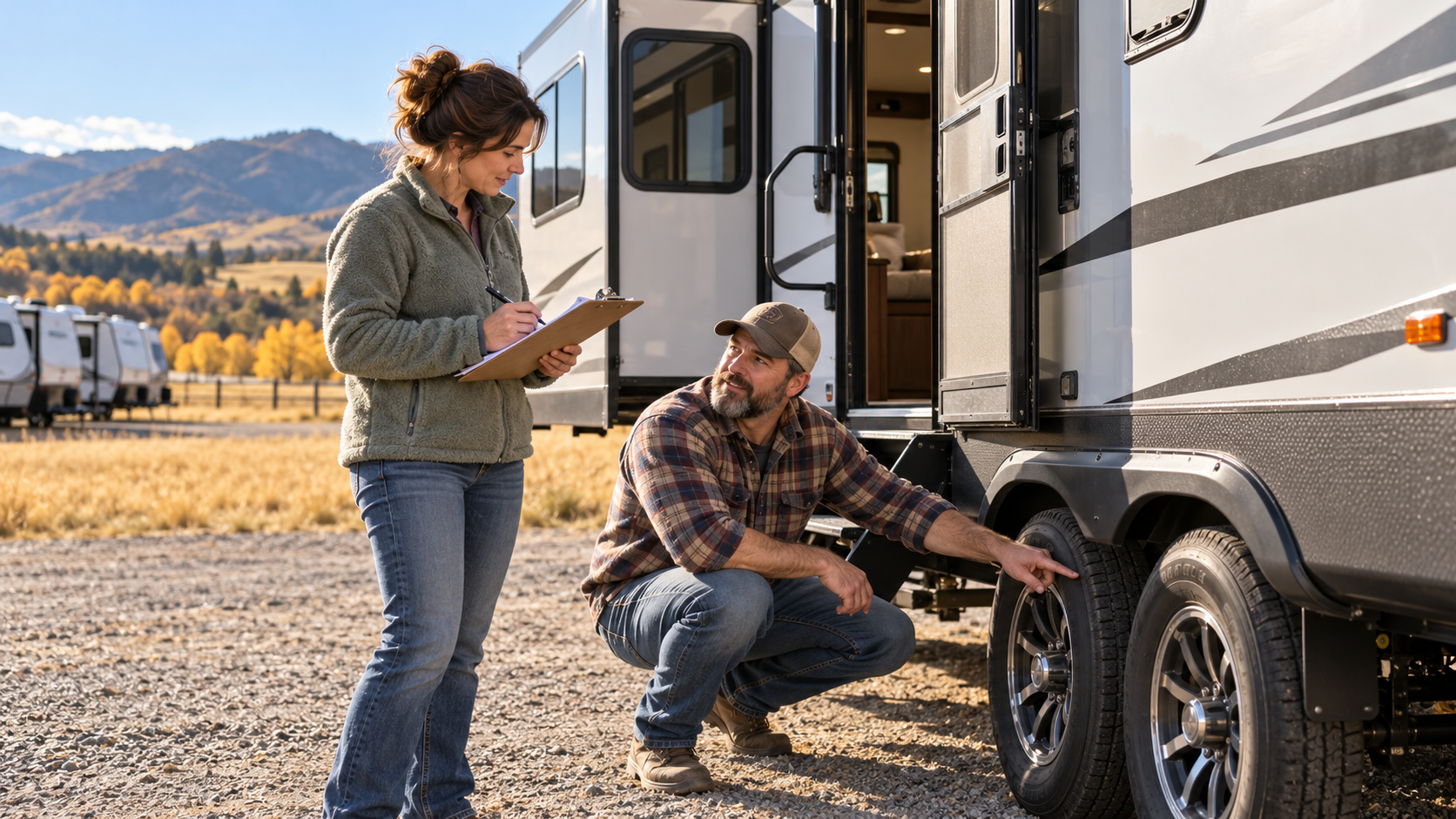
On the outside of a used RV, check the roof, sealant, sidewalls, windows, tires, and frame. These areas show how the RV was stored and maintained, and problems here often point to damage you cannot see inside.
Roof and sealant
The roof is the first line of defense against water, so give it the most attention. Most RVs have a rubber membrane, a TPO membrane, or a fiberglass or aluminum roof. Whatever the material, look for:
Cracked, peeling, or missing sealant around vents, skylights, antennas, and the front and rear caps
Tears, bubbles, or chalky wear in a membrane roof
Soft or spongy areas when you carefully walk or press on the roof
If you cannot safely get on the roof, ask the seller for recent roof photos or have a technician check it.
Sidewalls and caps
Stand at each corner and look down the length of the RV in good light. Bubbles, waves, or separation in fiberglass walls is called delamination, and it usually means water reached the wall structure. Check the front cap for cracks, since that area takes the most impact on the highway.
Windows, doors, and storage bays
Open every exterior door and compartment. Look for rust on hinges, warped bay doors, and water stains inside storage bays. Window seals should be soft and intact, not dried out or pulling away.
Tires, wheels, and frame
Read the DOT date code on each tire. RV tires often age out from sun and sitting long before the tread wears down, so an old set can mean a replacement cost right away. Look for uneven wear, which can point to alignment or axle problems. Then get low and check the frame for heavy rust, cracked welds, or bent sections, especially around the hitch area and spring hangers.
How Do You Tell if a Used RV Has Water Damage?
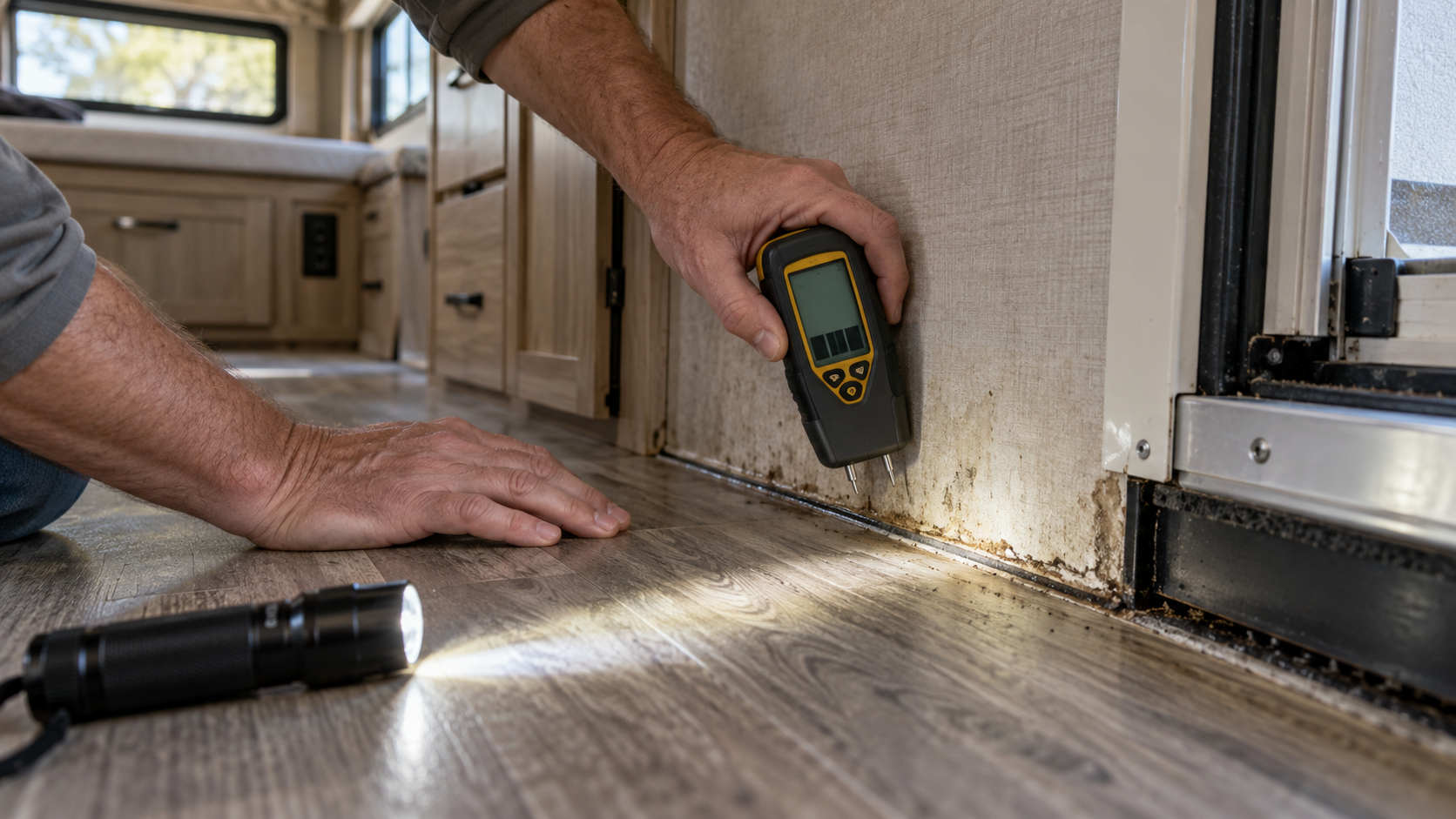
To tell if a used RV has water damage, press on floors and walls for soft spots, look for stains or discoloration on ceilings and in cabinet corners, and notice any musty smell. Fresh paint, new paneling, or heavy air freshener in one area can also be a sign that something was covered up.
Water damage spreads slowly and quietly. By the time it is visible, the wood framing behind the wall may already be rotting. Focus on the places where water usually gets in:
Around slide-outs: Check the floor and walls where the slide meets the main body.
Under windows and roof vents: Look for streaks, swollen trim, or wavy wallpaper.
Corners and ceiling edges: Stains in upper corners often trace back to front or rear cap seals.
Under sinks and around the toilet: Plumbing leaks can soften the subfloor over time.
Inside cabinets and closets: These areas are rarely opened, so leaks go unnoticed.
Run your hand along the lower walls and press down with your foot near every exterior door. A floor that flexes or feels spongy is a serious warning sign. Some inspectors also use a moisture meter, which can detect dampness behind walls that looks perfectly dry.
Our advice: Walk away from any RV with widespread soft spots unless the price reflects a full repair and you have a trusted shop ready to do it. Structural water damage repairs can cost more than the RV is worth.
Which RV Systems and Appliances Should You Test?
Test every system in a used RV while it is hooked to shore power and has water and propane: electrical, plumbing, propane appliances, heating and cooling, slide-outs, and leveling jacks. Do not accept "it worked last season" as a substitute for seeing it work.
Here is a practical walkthrough order:
Electrical: Plug into shore power and check outlets, lights, and the converter. Then unplug and run lights on battery power. Ask how old the batteries are.
Fresh water and plumbing: Fill or connect water, turn on the pump, and run every faucet and the shower. Flush the toilet and look under sinks for drips.
Water heater: Test it on both propane and electric if it has both modes.
Refrigerator: Many RV fridges run on propane and electric. Test each mode, and give it time to cool.
Furnace and air conditioning: Make sure the furnace ignites and blows warm air, and that the AC cools without unusual noise.
Propane system: Smell for gas near the tanks and appliances, and check that the propane detector works. Test smoke and CO detectors too.
Slide-outs: Run every slide fully in and out. Watch for jerky movement, grinding, or gaps in the seals when closed.
Leveling jacks and awning: Extend and retract them. Hydraulic leaks or slow electric motors can be costly to fix.
Generator: If equipped, start it, put a load on it by running the AC, and ask for hour meter readings and service records.
Practical tip: Bring a short written checklist and mark each item as you go. It keeps you focused when you are excited about a floorplan.
What Is Different About Inspecting a Used Motorhome vs a Towable RV?
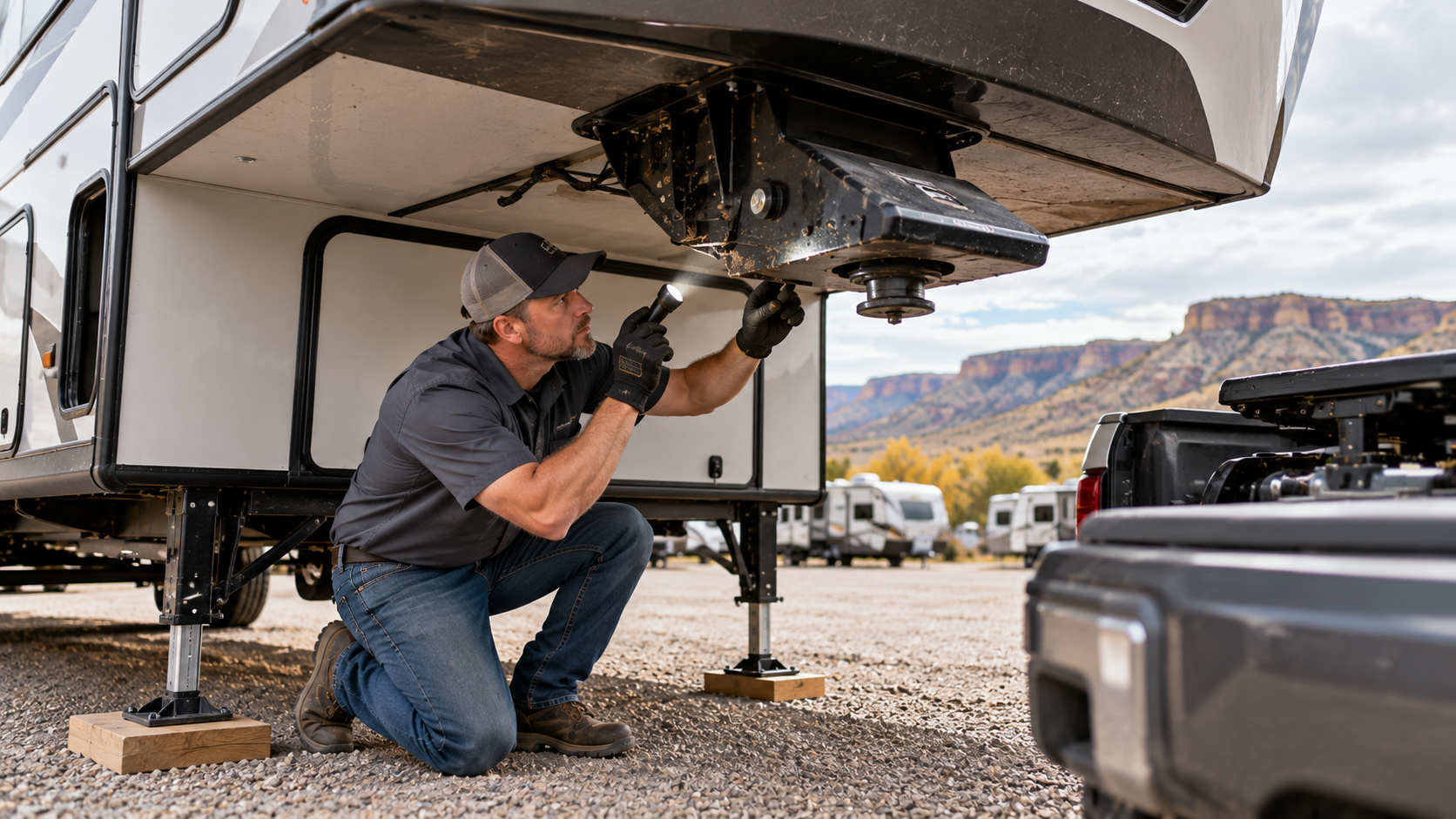
A used motorhome needs everything a towable needs plus a full check of the engine, transmission, brakes, and chassis. A used travel trailer or fifth wheel needs closer attention to the hitch, axles, brakes, and whether your truck can safely tow it.
Extra checks for used motorhomes
Whether you are looking at used Class A motorhomes, used Class C motorhomes, or used Class B camper vans, add these steps:
Ask for oil change, coolant, transmission, and brake service records.
Start the engine cold if possible. Listen for knocks, and watch for heavy smoke.
Check under the coach for oil, coolant, or transmission fluid leaks.
Take a test drive that includes a hill and highway speed. Pay attention to braking, steering play, and how the coach handles in crosswinds.
Check the dash air, cruise control, backup camera, and gauges.
Extra checks for used towables
For used travel trailers, used fifth wheels, and used toy haulers, focus on:
Hitch and coupler: Look for cracks, bent parts, or excessive wear on the coupler or kingpin.
Axles and suspension: Uneven tire wear or sagging springs can signal bent axles or worn hangers.
Brakes and bearings: Ask when wheel bearings were last repacked and when brakes were serviced.
Breakaway switch and lights: Test the breakaway system and every running, brake, and turn light.
Toy hauler ramp and garage: Check ramp cables, hinges, and the garage floor for damage from loading.
Can your tow vehicle handle it?
This is one of the most important questions for any towable buyer. Compare the RV's gross vehicle weight rating and hitch or pin weight to your truck's towing capacity and payload, not just the trailer's dry weight. The Pierce RV tow guides can help you start that comparison, and the sales team can help you check the numbers on a specific unit.
What Paperwork Should You Ask for When Buying a Used RV?
Ask for the title, service and maintenance records, any remaining warranty paperwork, and owner's manuals. Then confirm that the VIN on the RV matches the title and check the VIN for open safety recalls.
Good paperwork tells you how the RV was cared for. Here is what to request and why it matters:
Title: Confirm the seller's name matches and that there is no lienholder listed. A branded title, such as salvage or rebuilt, affects value, insurance, and financing.
VIN match: Find the VIN plate on the RV and compare it to the title. On motorhomes, the chassis has its own identification as well.
Service records: Receipts for roof resealing, bearing service, generator maintenance, and engine work show real care, not just claims.
Recall status: Look up the VIN on the National Highway Traffic Safety Administration's recall site and ask whether any open recalls were completed.
Warranty and service contracts: Ask whether any manufacturer coverage remains and whether an extended service contract is available.
Manuals and keys: Missing manuals are easy to replace, but missing keys for bays and entry doors can be a hassle.
Once the paperwork checks out, you can line up the money side. Review RV financing options and get a trade-in value for your current RV so you know your budget before you negotiate.
What Are the Biggest Red Flags When Buying a Used RV?
The biggest red flags are soft floors or walls, delaminated sidewalls, a seller who will not let you test systems, missing or mismatched title paperwork, and a price far below similar units. Any one of these is a reason to slow down. Two or more is usually a reason to walk away.
Other warning signs we see buyers overlook:
Fresh patches in one spot. New sealant or paneling in a single area may be hiding a leak.
Strong cleaning or air freshener smells. These can mask mold or mildew.
Winterization that was skipped. In cold climates like Montana, freeze damage to water lines and the water heater is common in RVs that were not winterized.
No maintenance history at all. Older RVs with zero records carry more unknowns.
Pressure to decide today. A good deal will still be a good deal after a careful walkthrough.
Common mistakes buyers make
Falling for the floorplan and skipping the inspection
Testing only on shore power and never on battery or propane
Forgetting to budget for tires, batteries, and a first service visit
Buying a towable without confirming payload, not just tow rating
Assuming "as-is" means "probably fine"
If you are comparing where to shop, our guide on where to buy a used RV covers dealerships, private sellers, online listings, and auctions side by side.
How Can Pierce RV Help You Buy a Used RV With Confidence?
Pierce RV makes the used RV inspection process easier by letting you compare inspected pre-owned units in person at its Billings and Great Falls stores, with service, parts, and financing all under one roof. Pierce has been a Montana family business since 1924 and an RV dealer since 1969.
Here is how that helps during and after your purchase:
Compare units side by side. Shop used RVs at the Billings location or used RVs at the Great Falls location and walk through several floorplans in one visit.
Ask the right questions on site. The sales team can show you what the checklist above looks like on a real unit, from slide-out seals to tire date codes.
Service after the sale. Factory-trained technicians at the Billings RV service center and the Great Falls RV service center handle warranty work, collision repair, and routine maintenance.
Parts when you need them. Visit RV parts in Billings or RV parts in Great Falls for replacement parts and accessories.
Support on the road. As a Route 66 RV Network dealer, Pierce RV gives buyers access to support at more than 200 network locations across North America.
Shoppers drive in from across Montana and neighboring Wyoming, North Dakota, South Dakota, and Idaho. If you are on a tighter budget, start with RVs under $20,000 for sale in Montana, and plan for off-season RV storage if you do not have room at home.
Frequently Asked Questions
Should I get a professional inspection on a used RV?
A professional inspection is a smart move for most used RV purchases, especially private sales and older units. A trained inspector can spot moisture behind walls, roof problems, and electrical or propane issues that are easy to miss. The cost is small compared with a major repair. If you buy from a dealer, ask what was inspected and reconditioned before the RV was listed.
How long does it take to inspect a used RV?
Plan on at least one to two hours for a thorough walkthrough of a towable, and more for a motorhome that needs a test drive. Rushing is how problems get missed. Schedule your visit when you have time to run every system, check the roof and underside, and review paperwork without feeling pressured to decide on the spot.
What is delamination on an RV, and can it be fixed?
Delamination happens when the outer fiberglass skin separates from the wall underneath, usually because water got into the wall. It shows up as bubbles or waves in the sidewall. Small areas can sometimes be repaired, but the repair often involves fixing the water source and damaged framing. Widespread delamination is expensive and usually a reason to pass on the RV.
How do I check the age of RV tires?
Look for the DOT code on the tire sidewall. The last four digits show the week and year the tire was made. For example, 2421 means the 24th week of 2021. RV tires can look fine but still be too old to trust, since sun exposure and long periods of sitting break down the rubber over time.
Is a used RV with a salvage or rebuilt title worth buying?
A salvage or rebuilt title means the RV was once declared a total loss. It can sell for much less, but it may be harder to insure, finance, and resell later. The quality of the repair matters a lot. Only consider one if you can see repair records, have it inspected independently, and are comfortable with lower resale value.
What questions should I ask a used RV seller?
Ask how and where the RV was stored, when the roof was last resealed, whether it has had any leaks or water damage, how often it was used, and whether it was winterized each year. Ask for service records and the reason for selling. Clear, specific answers are a good sign. Vague answers or missing history call for a closer inspection.
Final Takeaway
When you buy a used RV, the condition matters more than the model year. Start with the roof and seals, hunt for water damage, test every system on shore power, battery, and propane, and confirm the title, VIN, and service history before you talk price. For motorhomes, add a full engine and chassis check. For towables, make sure your truck can safely handle the weight.
Ready to put this checklist to work? Browse Pierce RV's used RV inventory online, then contact the Pierce RV team to schedule a walkthrough at the Billings or Great Falls store. Bring your questions and your tow vehicle details, and take the time you need to find a used RV you can trust.
