
Where Can You Park an RV for Free?
You can park an RV for free on many public lands, including Bureau of Land Management (BLM) land and national forests, where dispersed camping is often allowed for up to 14 days. For overnight stops while traveling, some Walmart stores, Cracker Barrel restaurants, Cabela's locations, truck stops, and casinos allow RV parking with permission. Rules vary by location, so always confirm before you stay.
What Does It Mean to Park an RV for Free?
Free RV parking generally falls into two categories: boondocking (also called dry camping or dispersed camping) and overnight parking at businesses or rest areas.
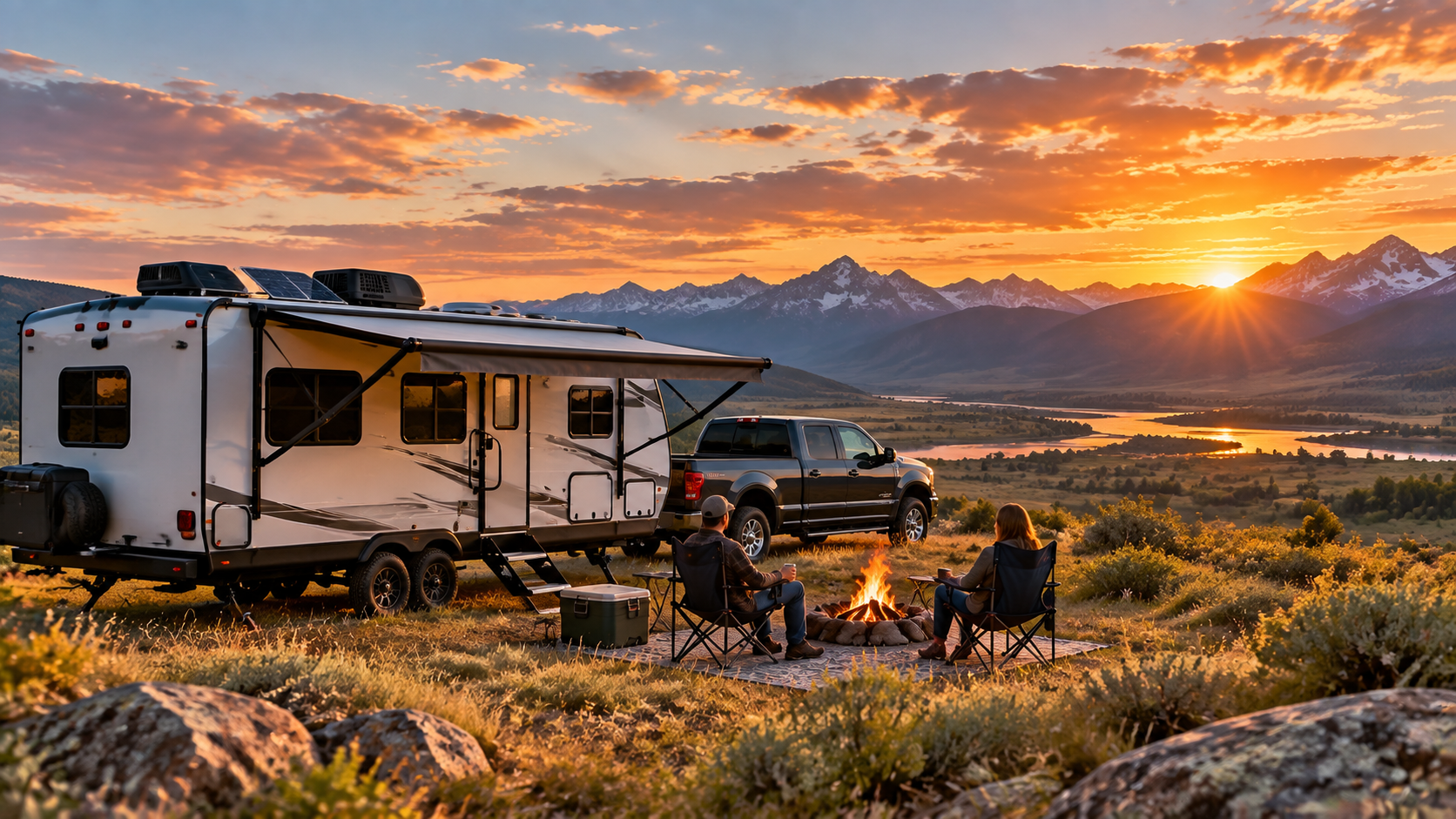
Boondocking means camping without hookups, usually on public land away from developed campgrounds. You rely on your RV's own water tanks, batteries, solar, or generator. Stays can last days or even weeks, depending on local rules.
Overnight parking is a short stop, usually one night, in a parking lot or rest area while you're on the road. It's meant for sleeping, not camping. That means no awnings, slide-outs kept in when possible, no chairs or grills outside, and leaving early the next morning.
Knowing the difference matters. Setting up a full campsite in a store parking lot is one of the fastest ways to lose that privilege for every RVer.
Where Are the Best Places to Park an RV for Free?
The best free RV parking options are public lands for longer stays and business parking lots for quick overnight stops. Here's a breakdown of each.
Bureau of Land Management (BLM) Land
BLM land is one of the most popular places for free RV camping in the western U.S. Much of it allows dispersed camping outside developed areas, commonly with a stay limit of 14 days in one spot before you need to move.
What to expect:
No hookups, restrooms, or trash service in most dispersed areas
Rough or unpaved access roads
Wide-open spaces and plenty of privacy
Tip: Check the local BLM field office website or call ahead for fire restrictions, seasonal closures, and any area-specific rules.
National Forests
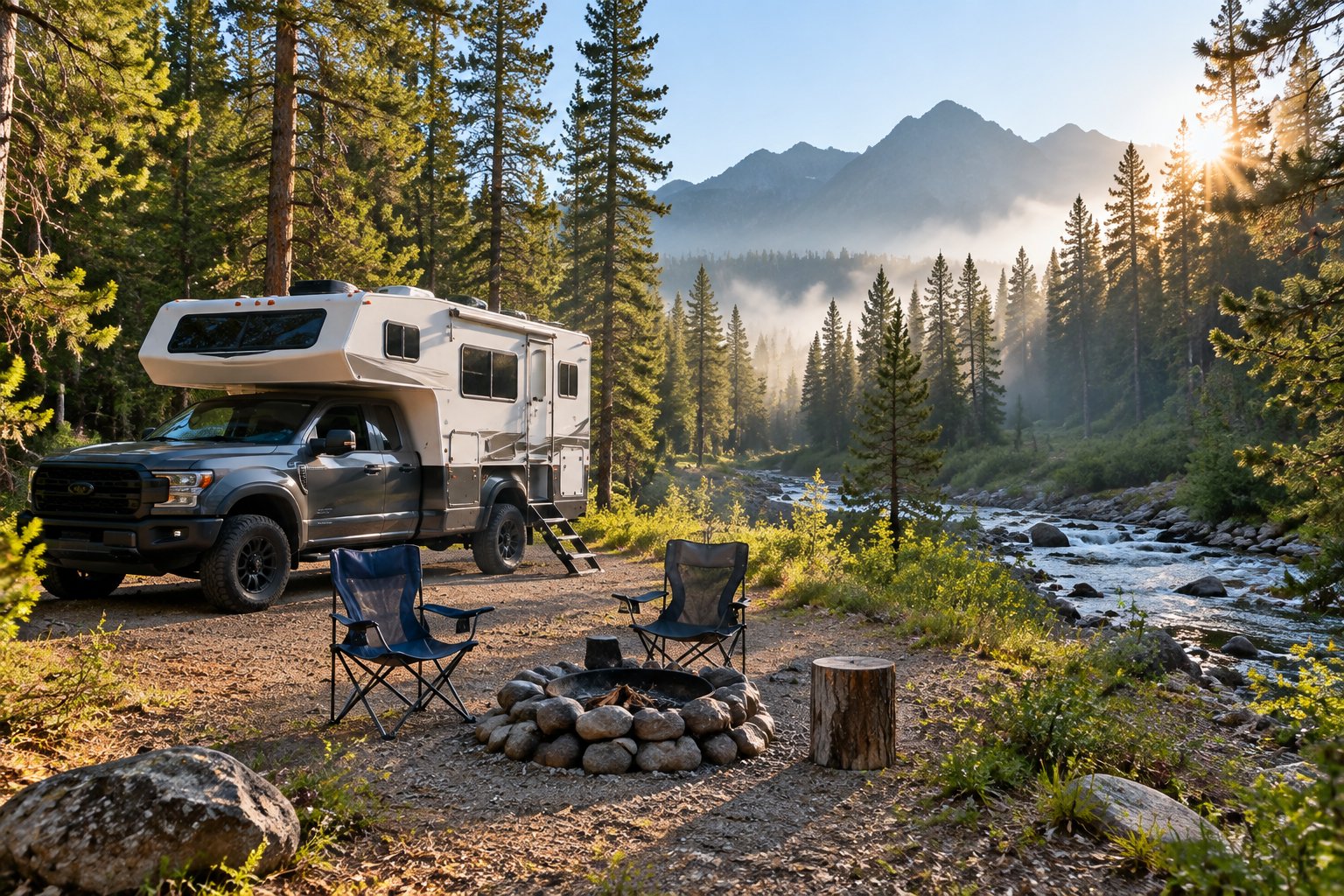
Many national forests allow dispersed camping along forest roads and in established pull-offs, also commonly limited to 14 days. Montana has several large national forests within driving distance of Billings and Great Falls, including the Custer Gallatin and the Lewis and Clark National Forests.
What to expect:
Shaded, scenic sites, often near streams or trailheads
Narrow or steep roads that may not suit large rigs
Fire restrictions during dry months
Tip: Pick up a Motor Vehicle Use Map (MVUM) from the ranger district. It shows which roads are open to vehicles and where dispersed camping is allowed. In grizzly country, some forests have food storage orders, so ask the ranger station what applies where you're headed.
Walmart Parking Lots
Some Walmart stores allow overnight RV parking, but it's decided store by store and often depends on local ordinances. Many stores in cities or tourist areas don't allow it.
Tip: Call the store or ask the manager on duty before you settle in. Park at the edge of the lot, away from the entrance, and buy something while you're there as a thank-you.
Cracker Barrel, Cabela's, and Similar Businesses
Many Cracker Barrel restaurants have long parking spaces designed for RVs and buses, and some locations allow overnight parking. Some Cabela's and Bass Pro Shops stores also have RV parking areas. As with Walmart, permission varies by location.
Truck Stops
Large truck stop chains often allow RVs to park overnight. They're open 24 hours and have fuel, food, and restrooms.
Keep in mind: Truck stops can be noisy, and truck parking spaces are for commercial drivers who are required to rest. Use designated RV or car parking when available, and don't take up truck spots.
Casinos
Some casinos welcome overnight RV parking, and a few even have dedicated RV lots. Many ask you to register with security or sign up for a player's card first.
Rest Areas
Some states allow overnight parking at highway rest areas, while others limit stays to a few hours or prohibit overnight stays entirely. Look for posted signs, and check the state Department of Transportation website before counting on one.
Friends, Family, and Hosted Programs
Parking in a friend or family member's driveway can be a great free option, but check local ordinances and HOA rules first. Programs such as Harvest Hosts and Boondockers Welcome connect RVers with wineries, farms, and private hosts, though these usually require a paid membership, so they're low cost rather than truly free.
How Do You Find Free RV Parking Spots?
The easiest way to find free RV parking is to use a combination of camping apps, public land maps, and a quick phone call to confirm.
Use RV camping apps and websites. Tools like Campendium, iOverlander, and FreeRoam let RVers share free campsites, road conditions, cell signal, and recent reviews.
Check public land maps. BLM and U.S. Forest Service websites show public land boundaries and dispersed camping areas.
Read recent reviews. Conditions change. A site that was great last summer may be closed or washed out now.
Call ahead. For businesses, confirm with the manager. For public land, call the ranger district or field office.
Scout before you commit. On unfamiliar forest roads, walk or drive ahead to check for turnaround space before pulling in a large rig.
Arrive with daylight. Finding and leveling a dispersed site is much easier before dark.
Which RVs Are Best for Free Camping and Boondocking?
Smaller, self-contained RVs are usually the best choice for boondocking because they fit more sites and handle rough roads better. But the right setup matters more than size alone.
Truck Campers
Truck campers are hard to beat for remote boondocking. They ride on a pickup, so they can reach forest roads and tight sites that trailers can't. Browse our truck campers for sale if you want maximum access to backcountry spots.
Class B Camper Vans
Class B vans fit in regular parking spaces, which makes them ideal for stealthy overnight stops and tight dispersed sites. See our Class B camper vans.
Travel Trailers
Compact and mid-size travel trailers work well for boondocking when paired with a capable tow vehicle. Shorter trailers are easier to maneuver on forest roads and in small pull-offs.
Class C Motorhomes
A Class C motorhome gives you a self-contained setup with no hitching or unhitching, which is handy for quick overnight stops.
Larger Fifth Wheels and Class A Motorhomes
Big rigs can boondock too, but they're limited to wider, flatter, easier-to-reach sites. They're often a better fit for BLM land with open terrain than for narrow national forest roads.
What Features Make Free RV Camping Easier?
The features that matter most for free camping are the ones that let you live comfortably without hookups.
Large fresh, gray, and black tanks so you can stay longer between dump stations
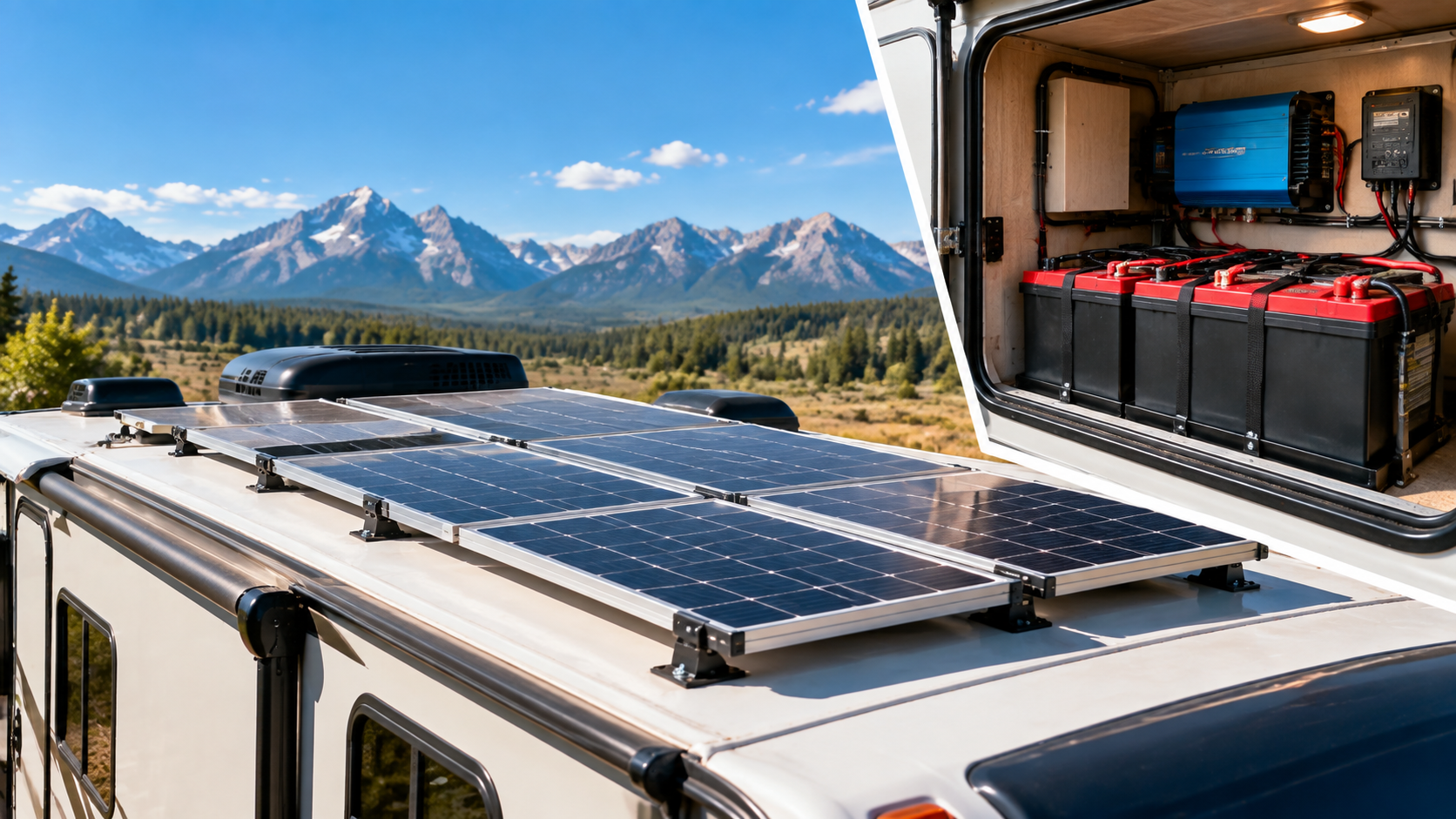
Solar panels and lithium batteries for quiet power without running a generator
A generator for cloudy days or heavy power use
An inverter to run standard outlets from battery power
High ground clearance for rutted forest roads
Good insulation and a reliable furnace for cold Montana nights, even in summer at elevation
Water-saving fixtures like low-flow showerheads
Our RV parts department carries accessories to help you get boondocking ready, and our RV service center can help with upgrades like solar and battery systems. Great Falls owners can visit our Great Falls service department.
What Rules Should You Follow When Parking an RV for Free?
Follow posted rules, respect stay limits, leave no trace, and always get permission on private property. Good etiquette keeps free parking available for everyone.
On public land:
Stick to the posted stay limit, commonly 14 days, then move to a new area
Camp on durable surfaces and use existing sites instead of making new ones
Follow fire restrictions and never leave a fire unattended
Pack out all trash
Dump tanks only at approved dump stations
Store food properly in bear country
In parking lots:
Get permission first
Stay one night only
Keep slides in when possible and skip awnings, chairs, and grills
Keep noise down and generators off late at night
Leave the spot cleaner than you found it
What Are Common Mistakes with Free RV Parking?
The most common mistakes are assuming parking is allowed, underestimating road conditions, and running out of water or power.
Assuming every Walmart allows overnight parking. Policies vary by store and city. Always ask.
Taking a big rig down an unknown forest road. Some roads have no turnaround space. Scout first.
Running out of fresh water or battery power. Know your tank sizes and daily usage before heading out.
Overstaying. Ignoring stay limits can lead to fines and closures.
Dumping tanks improperly. It's illegal and damages the areas that make free camping possible.
Ignoring weather. Heavy rain can turn dirt roads into mud, and mountain nights can drop below freezing even in summer.
Where Can You Park Your RV When You're Not Using It?
Parking at home isn't always an option because of HOA rules, city ordinances, or limited space. Many RV owners use a dedicated storage facility during the off-season. Pierce RV offers RV storage for owners who need a place to keep their RV between trips.
How Can Pierce RV Help You Get Ready for Free Camping?
Pierce RV has dealerships in Billings and Great Falls, Montana, and can help you choose and outfit an RV built for life off the grid.
Find the right RV. Compare truck campers, travel trailers, Class B vans, and Class C motorhomes in our full RV inventory.
Check your tow setup. Use our towing capacity guide to see what your vehicle can handle.
Finance your RV. Explore RV financing options.
Trade up. Get your RV trade-in value and move into a more boondocking-friendly rig.
Frequently Asked Questions
Is it legal to park an RV anywhere overnight?
No. Overnight RV parking is only legal where it's allowed by the property owner or land manager. Many cities ban overnight parking on streets, and private businesses decide their own policies. Public lands like BLM areas and national forests often allow dispersed camping, but closures and restrictions apply. Always look for posted signs and confirm with the business or agency.
What is boondocking?
Boondocking is camping in an RV without water, sewer, or electric hookups, usually on public land away from developed campgrounds. It's also called dry camping or dispersed camping. Boondockers rely on their RV's tanks, batteries, solar panels, and generators. It's typically free and offers more privacy and scenery than crowded campgrounds.
How long can you stay on BLM land for free?
Many BLM areas allow dispersed camping for up to 14 days in one location within a set period, after which you must move a certain distance away. Specific rules vary by field office, and some areas have different limits or seasonal closures. Check with the local BLM office before your trip to confirm current rules.
Does Walmart still allow RVs to park overnight?
Some Walmart stores still allow overnight RV parking, but many do not. The decision is made by each store and is often affected by local laws. Call ahead or ask the store manager when you arrive. If permitted, park away from the entrance, stay one night, and don't set up camp.
Can you sleep in your RV at a rest area?
It depends on the state. Some states allow overnight rest area stays, others limit parking to a few hours, and some prohibit overnight stays completely. Check posted signs at the rest area and the state Department of Transportation website before planning to stop.
What type of RV is best for boondocking?
Truck campers and Class B camper vans are usually best for boondocking because they're compact and can reach remote sites. Small travel trailers also work well. Whatever you choose, look for large holding tanks, solar or generator power, good ground clearance, and solid insulation.
Is free RV camping safe?
Free RV camping is generally safe when you plan ahead. Choose sites with recent positive reviews, arrive during daylight, trust your instincts, and let someone know where you'll be. Carry enough water, a first-aid kit, and a way to communicate, since many remote areas have no cell service. In Montana, practice bear-safe food storage.
Final Takeaway
You can park an RV for free on BLM land and in many national forests, and some Walmart, Cracker Barrel, Cabela's, truck stop, and casino locations allow overnight stays with permission. Plan ahead with camping apps and public land maps, follow stay limits and posted rules, and choose an RV set up to live comfortably without hookups.
Ready to find an RV built for off-grid adventures? Browse our RV inventory, check what's on the lot in Billings or Great Falls, or contact Pierce RV to talk with our team about boondocking-ready options.
